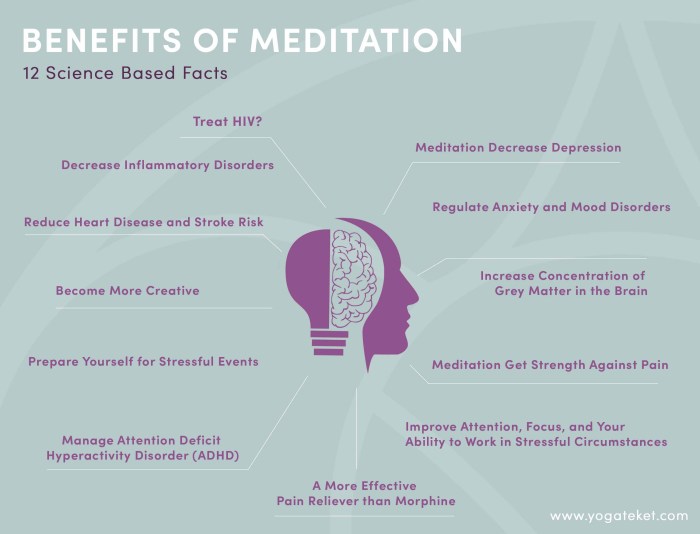
12 Benefits of Meditation for Physical and Mental Health explores the profound impact of meditation on overall well-being, offering insights into the transformative power of mindfulness practices. Dive into this enlightening journey to discover the key advantages of incorporating meditation into your daily routine.
Meditation has been revered for centuries as a powerful tool for cultivating inner peace and harmony, benefiting both the body and mind. Let’s delve deeper into the myriad advantages that meditation can offer for enhancing your physical and mental health.
Introduction to Meditation: 12 Benefits Of Meditation For Physical And Mental Health
Meditation is a practice that involves focusing the mind and eliminating distractions to achieve a state of mental clarity and emotional calmness. It is often used for relaxation, stress reduction, and personal growth.
The history of meditation dates back thousands of years, with origins in ancient Indian and Chinese cultures. It was initially practiced as a spiritual and religious ritual but has since evolved into a mainstream practice with various health benefits.
Types of Meditation Practices
- Mindfulness Meditation: Focuses on being present in the moment and observing thoughts and sensations without judgment.
- Transcendental Meditation: Involves repeating a mantra to achieve a state of restful awareness.
- Loving-Kindness Meditation: Focuses on cultivating feelings of love and compassion towards oneself and others.
- Yoga Meditation: Combines physical postures, breathing exercises, and meditation to promote overall well-being.
Popularity of Meditation in Modern Society
In recent years, meditation has gained popularity in modern society as more people seek ways to manage stress, improve mental health, and enhance overall well-being. It is widely practiced in workplaces, schools, and healthcare settings as a tool for promoting mental clarity and emotional resilience.
Physical Benefits of Meditation
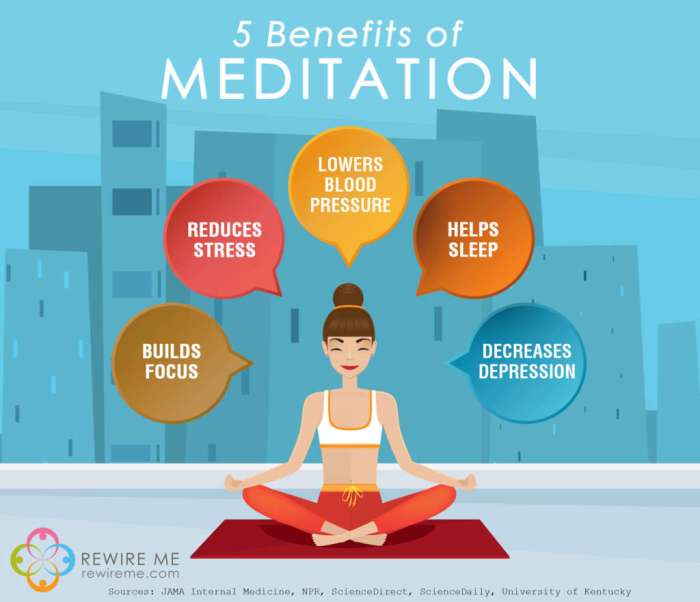
Meditation is not only beneficial for mental health but also has a positive impact on physical well-being. Here are six physical health benefits of incorporating meditation into your daily routine:
Improved Sleep Quality
Meditation can help calm the mind and relax the body, making it easier to fall asleep and improve the quality of sleep. By reducing stress and anxiety levels, meditation promotes a restful night’s sleep.
Pain Management
Studies have shown that meditation can help reduce the perception of pain. By increasing mindfulness and awareness, individuals practicing meditation can better manage chronic pain conditions and improve their overall quality of life.
Boosted Immune System
Meditation has been linked to a stronger immune system due to its stress-reducing effects. Lower stress levels can lead to a healthier immune response, making individuals less susceptible to illnesses and infections.
Mental Benefits of Meditation
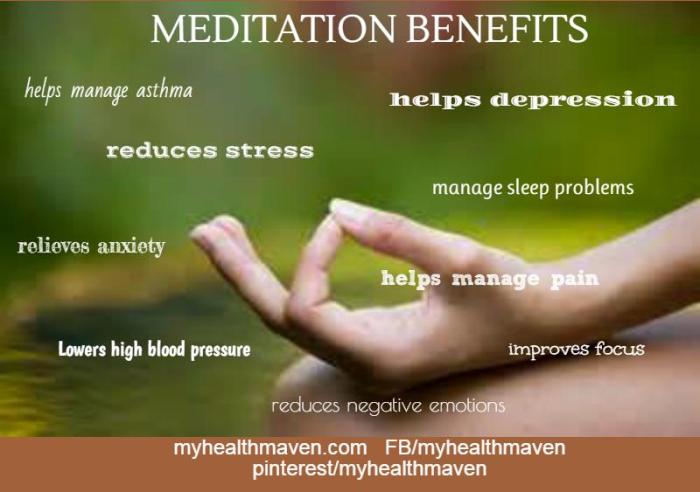
Meditation not only has physical benefits but also offers numerous advantages for mental health. Let’s explore six key mental health benefits of incorporating meditation into your routine.
Reduction of Stress and Anxiety, 12 Benefits of Meditation for Physical and Mental Health
Meditation has been shown to be effective in reducing stress and anxiety levels. By practicing mindfulness and focusing on the present moment, individuals can calm their minds and alleviate feelings of worry and tension.
Enhanced Focus and Concentration
Regular meditation practice can improve cognitive function, leading to enhanced focus and concentration. By training the mind to stay present and avoid distractions, individuals can better direct their attention towards tasks and activities.
Promotion of Emotional Well-being
Meditation plays a crucial role in promoting emotional well-being by helping individuals regulate their emotions and develop a greater sense of self-awareness. By cultivating a sense of inner peace and acceptance, meditation can lead to improved emotional resilience and overall mental well-being.
Meditation Techniques

When it comes to meditation, there are various techniques that individuals can explore to find what works best for them. Each technique offers unique benefits and approaches to cultivating mindfulness and inner peace.
Mindfulness Meditation
Mindfulness meditation involves focusing on the present moment without judgment. Here are some steps beginners can follow to start a mindfulness meditation practice:
- Find a quiet and comfortable place to sit or lie down.
- Close your eyes and take deep breaths to center yourself.
- Focus on your breath or a specific sensation in your body.
- Whenever your mind wanders, gently bring your focus back to the present moment.
- Start with short sessions and gradually increase the duration as you become more comfortable.
Loving-Kindness Meditation
Loving-kindness meditation involves cultivating feelings of love and compassion towards oneself and others. Here are some tips for beginners to practice loving-kindness meditation:
- Sit in a comfortable position and close your eyes.
- Repeat phrases such as “May I be happy, may I be healthy, may I be safe, may I live with ease” silently or aloud.
- Extend these wishes to loved ones, acquaintances, and even those you may have difficulties with.
- Allow yourself to feel the emotions that arise without judgment.
Transcendental Meditation
Transcendental meditation involves using a mantra to transcend the conscious mind and reach a state of pure awareness. Here are some guidelines for beginners interested in transcendental meditation:
- Receive a mantra from a certified teacher trained in transcendental meditation.
- Sit comfortably with your eyes closed and silently repeat the mantra for 15-20 minutes.
- Allow thoughts to come and go without engaging with them.
- Gradually increase the duration of your practice over time.
Incorporating Meditation into Daily Routine
It can be challenging to establish a consistent meditation practice, but there are ways to make it a part of your daily routine:
- Set aside a specific time each day for meditation, whether it’s in the morning, during a break, or before bed.
- Start with short sessions and gradually increase the duration as you build your practice.
- Experiment with different techniques to find what resonates with you the most.
- Be patient with yourself and understand that it’s normal to have fluctuations in your practice.
Last Point
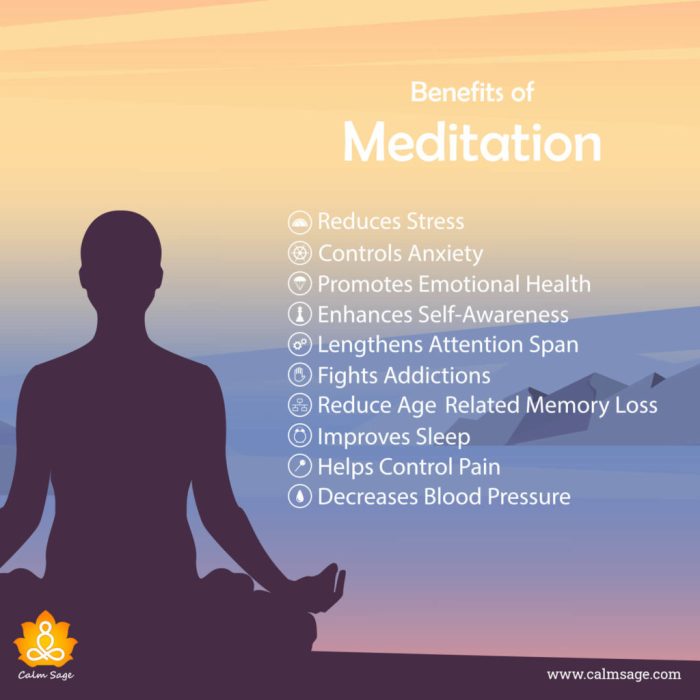
Embark on a path of self-discovery and holistic wellness by embracing the practice of meditation. Experience the harmonious fusion of mind, body, and spirit as you reap the countless benefits that meditation has to offer. Elevate your well-being and transform your life through the profound effects of this ancient practice.